
Where does one begin when you have an incredible life story to tell, of a man who has travelled the world and been a part of some of the most historic events that have taken place in the past 60 years? I suppose you should commence at the beginning….
So, it all started on a summer’s day, Thursday 15th July 1943, in Dagenham, East London. The weather forecast provided by the Met Office for that day was “Top Secret” however I did manage to find it under now declassified information. To summarise the weather picture, I quote : “light variable winds, fine with, small amounts of cloud in most districts, a few fog patches around dawn, warm by day and moderate night temperature”.
This would undoubtedly mean that London would have attracted some attention from the Luftwaffe. London had experienced some of the worst bombing in what was known as the “Blitz” and more was to come from the dreaded Doodle Bugs, the first flying bombs used in a terror campaign during the Second World War. However, at this time things were starting to look better with a recent British victory over the Germans in El Alamein, Egypt. The Allies had just invaded Sicily and Germany was starting to lose the War. There was also further optimism and great hope for the future from Dagenham with the birth of a baby boy who was named Peter Lambourne by his parents, Kitty and Jim.
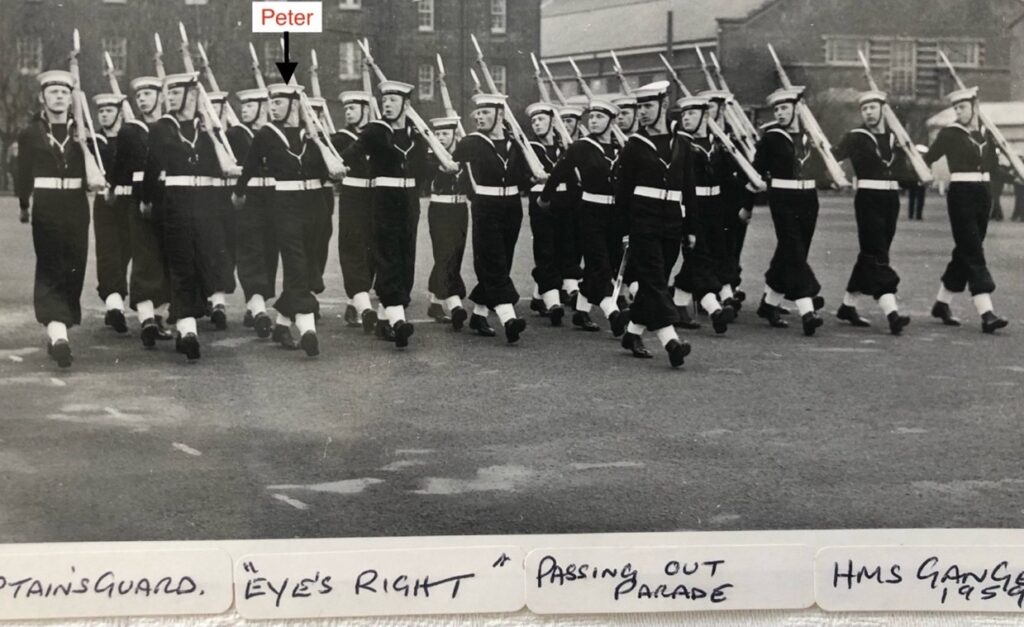
Peter Lambourne went to school at Goresbrook Road Secondary School, Dagenham which is in the London Borough of Barking. At the age of 15 in 1958, he decided that he wanted to join the Royal Navy. Peter was accepted to the Boys training Ship called HMS Ganges. The Naval establishment is located at Shotley, Suffolk.
It was here that Peter learnt how to be a Sailor. One of the tasks was climbing up a ship’s mast which was 148 ft high. Every boy at the school had to climb partway up to qualify. On ceremonial occasions the mast would be manned by a team of boys standing on various parts. The one who stood on the “truck” at the top was known as a “button boy”.

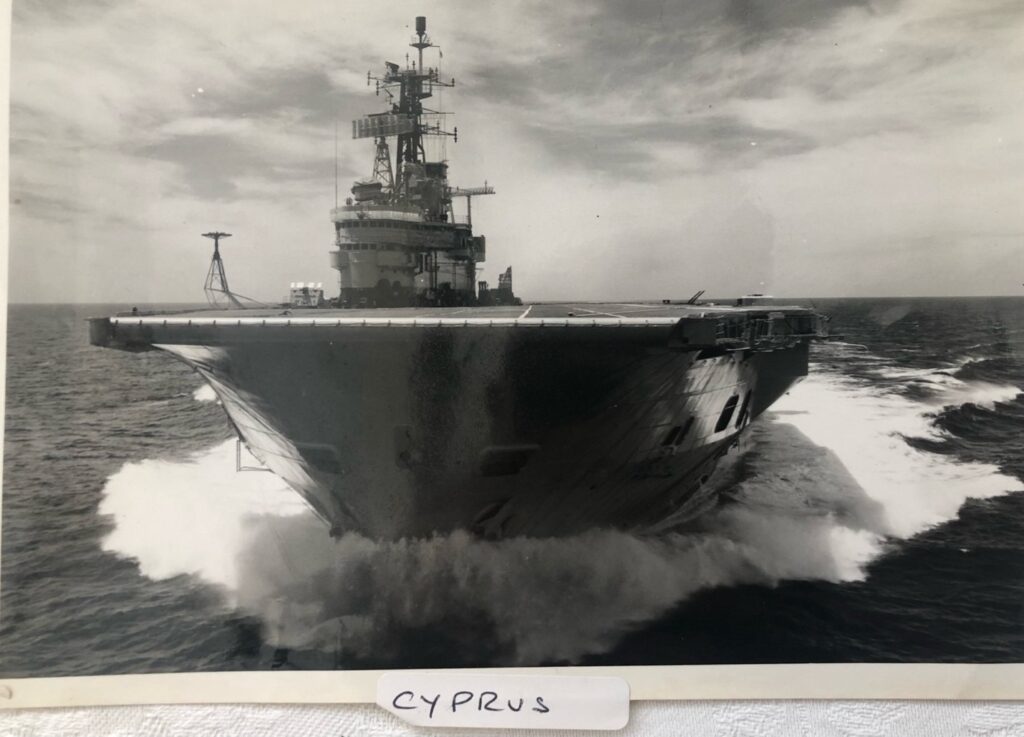
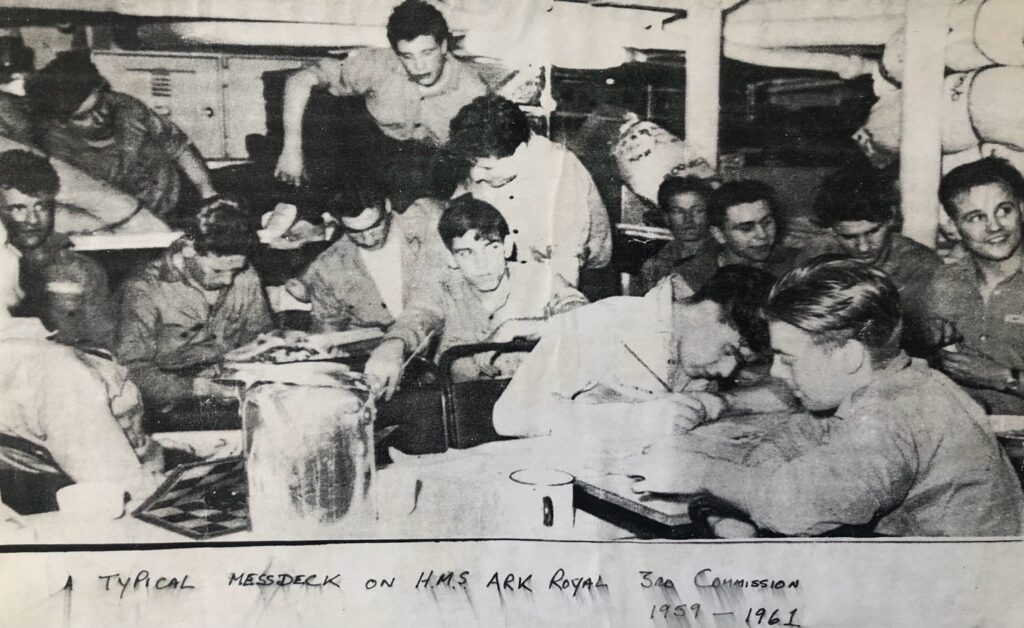
In 1959, Peter, at the age of 16, qualified from HMS Ganges to join HMS Ark Royal as a “Boy” Junior Stoker. During his time on the Aircraft Carrier, he served in the Mediterranean and spent Christmas 1960 in Malta and January 1961 in Portugal where he visited the Famous Fatima site.
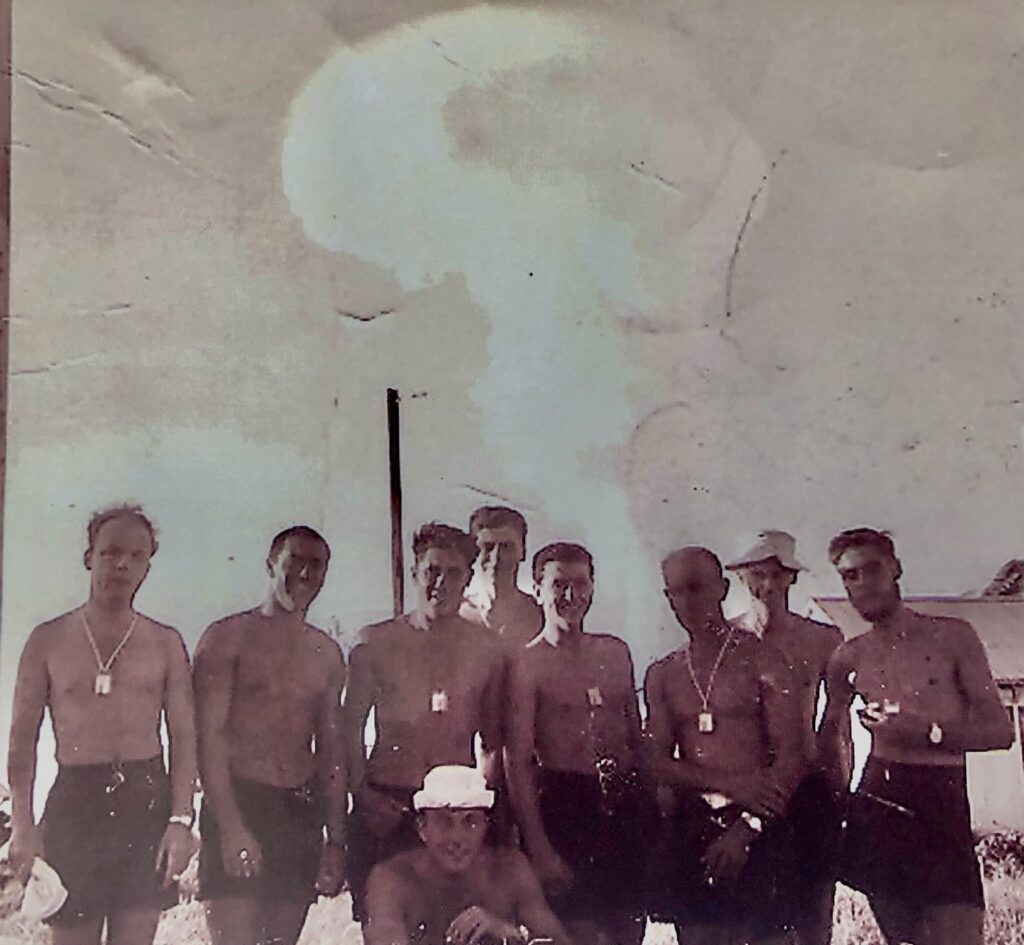
Later in 1961, Peter was assigned to HMS Wizard which was a Type 15 Frigate, and it was from this ship in 1962 that Peter went to Christmas Island and took part in what is known as Operation Dominic. This was a series of 31 nuclear test explosions conducted by the United States in the Pacific. Even though they were carried out by the American Government, a small party of approximately 729 UK men (including the AWE participants) were assigned to the Pacific to participate and help in the operation. The UK Government named these tests “Brigadoon”. This test series was scheduled quickly, in order to respond in kind to the Soviet resumption of testing.

Peter related to me his time spent on the Island during this period as part of the UK Naval contingency. He said that he had seen 22 Hydrogen Bomb explosions which were horrifyingly powerful. “We sat cross legged on the floor with our hands over our eyes, some 15-25 miles from the actual explosions”. “When the bomb went off the exploding flash was so bright I could see every bone in my hands which was covering my face. I could also see the man’s skeleton who was sat in front of me”. “We were told when we could take the hands from our face and turn to see the mushroom cloud”. “It was on one of these occasions that we posed for the picture, as you can see no protective clothes whatsoever, nothing.” “Six months after returning from these tests one of my mates who I served with on Christmas Island died of cancer, he was only slightly older than me”. “I was the youngest at 18 and now I am the only Naval man who was on Christmas Island during that time left alive, most others died long ago of cancer”
Peter appeared on a Channel 4 documentary recently entitled “Britain’s Atomic Bomb Scandal”. He gave an interview along with a few others, including another veteran and some deceased veterans’ children. Everyone had a similar story to tell – since the nuclear tests on the Island, they had all experienced some effects from the radiation caused by the tests.
Peter said that his son has problems with his thyroid, while his Granddaughter has had Thyroid Cancer. Peter said he believes his time on Christmas Island is highly likely to have been the cause of this and, along with other surviving veterans and their families, continues to seek recompense.
The documentary is on Channel 4 and is still available. It is well worth watching and will no doubt enlighten and move you.
In 1963 Peter, at 20 years old, was promoted to First Class Stoker and transferred to HMS Manxman which was a mine layer. The Aden Emergency (1963-67) was an insurgency against British rule in the south of the Arabian Peninsula. The unrest hastened British plans for withdrawal and marked the end of 20 years of decolonisation.
Peter recalled an experience during his time while serving on board: “She was the fastest ship in the Royal Navy. I was obviously situated in the boiler room as a First Class Stoker and you could feel the power that was being generated. It was during the trouble in Aden and we were on a mission, transporting Army personnel. The boiler was under intense strain we were ordered to maintain full speed ahead despite severe vibrations. I had been ordered to close a valve on command of my Officer, which I did. The next thing I remember I was being transferred ashore to an RAF Hospital in Aden. I had been injured in an implosion caused by the boiler collapsing”. Later in 1963 after making a full recovery Peter returned home to Portsmouth on HMS Woodbridge Haven for a well-earned period of leave.

In 1964, Peter was promoted to Leading Stoker on HMS Ausonia which was a depot ship and whilst in Malta acted as an accommodation and repair ship for the 5th Submarine Division. While Peter was on board during a families day off the coast of Malta the ship was attacked with dummy Mk 9 torpedoes on her Port side. These were fired by one of two T Class Submarines. The ship had been used for target practice because she was one of the few warships left in the Royal Navy that had a strong enough steel hull to withstand the blows. Peter was below deck on board the ship during this target practice: “I discovered the true colour of adrenaline” I will leave you to discern what he meant.
HMS Ausonia left Malta for the last time, arriving in Portsmouth in August 1964. The ships retirement was due to the gradual reduction of British forces in Malta, which also saw the disbandment of the 5th Submarine Division. Peter couldn’t wait to get home; he had made plans to marry Joan, the love of his life. However, the best laid plans sometimes go awry. Peter was called to respond to an emergency Draft to HMS Relentless to replace a Leading Stoker who had committed suicide. Later in 1965 Peter did return home, eventually marrying Joan on October 2nd at St. Mary’s, Plaistow East London. Together they moved to Gosport, Hampshire, where Peter attended HMS Sultan. It is the primary engineering training establishment for the Royal Navy. In 1966 Peter and Joan moved to Singapore to live where they had a bungalow.
Peter was promoted to Petty Officer and assigned to HMS Forth, this being a submarine depot ship that served in World War II and was modified to support nuclear-powered submarines in the 1960s. While in Singapore Peter’s son Paul was born in 1967. Tensions were growing in the Far East at this time with the conflict in Vietnam and it was decided that Joan and their newborn son should move back to Blighty, Peter gave up the bungalow and moved onboard to HMS Forth.
In 1968, Peter took over as Stoker Petty Officer on board HMS Aurora, a Frigate and like other ships of the class, Aurora was named after a figure of mythology, Aurora being the Roman equivalent of the Greek goddess Eos. This was to be Peter’s last ship while serving in the Royal Navy because in 1970 he left and joined the Hudson Steam Ship Company as a Third Engineering Officer. His job was to sail ships from Newcastle to London carrying coal which was for the use of the Power Stations in London. It was during 1970 that Peter’s daughter was born,,, named Sarah.
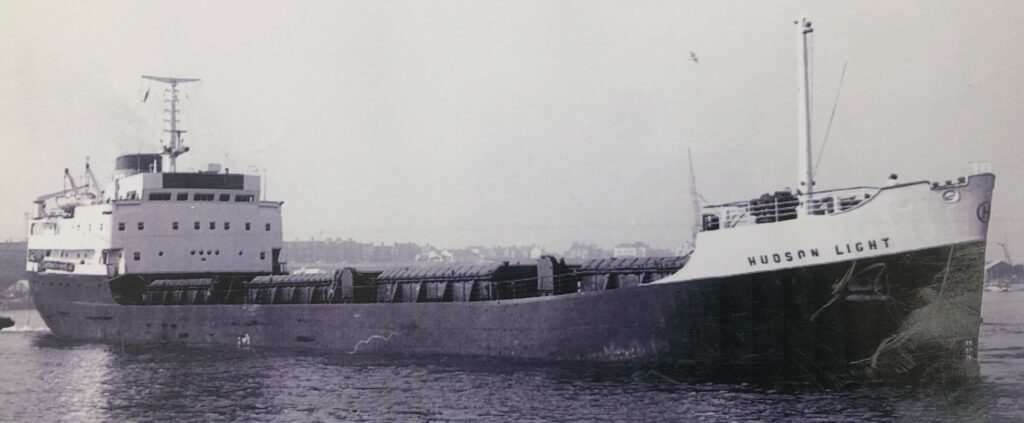
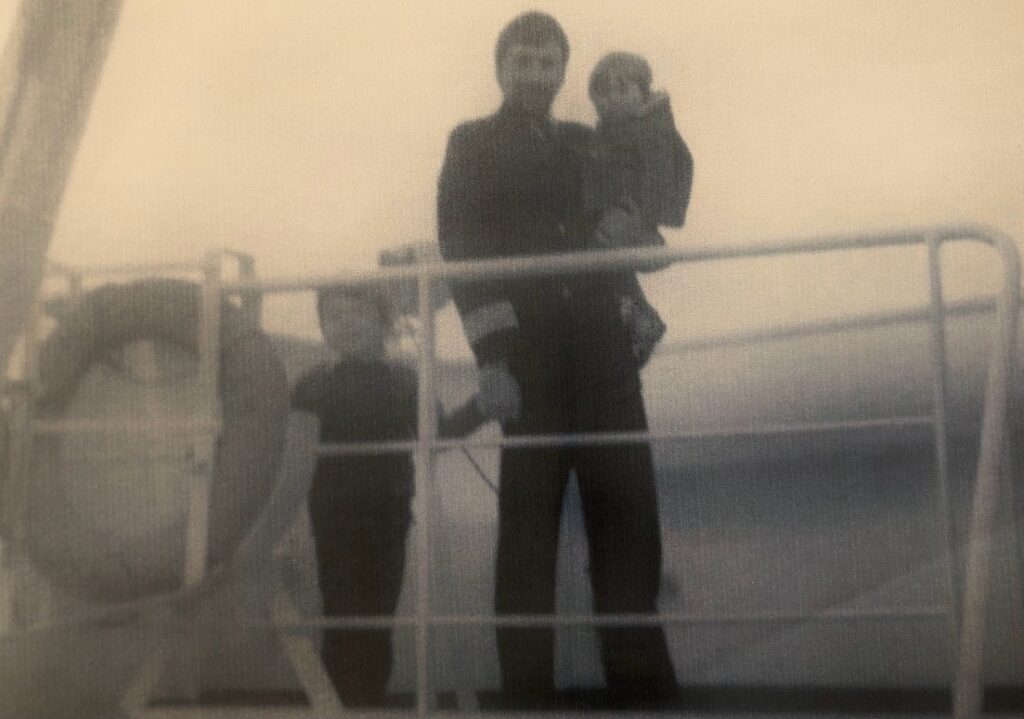
In 1973 Peter joined Shell Mex BP as a Relieving Second Engineer to a good number of River Tankers on the River Thames.
I was very impressed with Peter when he recited all the 12 ships names that he has served upon as the Relieving Engineer. In 1987 the group split, and Peter went to Shell River Tankers as the Second Engineer on the Tankers Shell Driver and Shell Distributor where he remained until 1990.
From 1990 to 1995 Peter worked for Lloyd’s Register of Shipping. Lloyd’s, best known for the classification and certification of ships, inspects and approves important components and accessories, including life-saving appliances, marine pollution prevention, fire protection, navigation, radio communication equipment, deck gear, cables, ropes, and anchors. Peter’s job was to inspect fires and explosions that may have happened onboard worldwide.
From 1995 to 1999 Peter worked for BP, berthing and discharging tankers at the Isle of Grain until he was offered redundancy, which he was ready to take. However, later in 1999, he found employment close to home and started work for Howard Smith Towage at Chatham Docks where he was tasked with pulling ships in and out of the Docks on the Tug named “Egerton”. From 2000 to 2005 Peter then worked as a Chief Engineer with Sheerness Tugs, serving on : Lady Maria, Morag, Emma, Brenda and Sun London. He left in 2005 to take care of his wife Joan who was dying with terminal cancer. They lived in Allhallows, Rochester and it was here he nursed his beloved wife until she sadly passed away in 2008.
Peter keeps busy with family. Along with his son and daughter he is also blessed with 3 granddaughters, Angharad, Sophie and Evie. He also has a grandson, named Josh. Peter attends various naval and Atomic Bomb Veteran reunions. Along with Freemasonry he is still very active.
Peter was Perfected into the Ancient and Accepted Rite in St. Bartholomew Chapter 786 in 1987 and was the first joining member of the Hoo Peninsula Chapter 1215.
All photographs were kindly supplied by Peter Lambourne’s private collection with his permission to use in this article.