
On a sunny autumnal Saturday stroll (it’s autumn down here in the Southern hemisphere), my wife and I stumbled upon a small museum just on the edge of the city, before you end up in the province. A beautiful old building, surrounded by palm trees and nesting parakeets.

Only a pound to get in, as I’m now resident here and a hidden gem was revealed to us; The Museo Histórico Cornelio de Saavedra. There are 10 rooms with permanent exhibits that cover the history, politics, economy and society as Argentina grew and broke away from the Spanish yoke.
Masonry expanded through the country thanks to the railways being built by British engineers and one day I hope to explore along these lines to see just how many lodges are still in existence.
But, back to this bijou museum.
In one of the rooms, there were a number of artifacts that had belonged to Leandro Nicéforo Alem (born Leandro Alén; 11 March 1841 – 1 July 1896). A politician, founder and leader of the Radical Civic Union and an active Freemason. His father was the chief of the political police for the Governor of the Province of Buenos Aires. After a particularly nasty battle, his father was executed and to reduce association with his father, he changed his name to Alem.
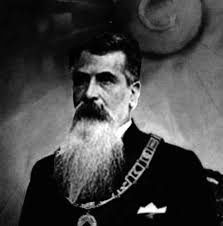
An accomplished soldier, he fought in the war against Paraguay at the tender age of 18 and then returned to Buenos Aires to complete his law studies. With his law degree he became a “defender of the poor,” providing services free of charge to those unable to pay.
His political aspirations were passionate and he was elected to the provincial legislature in 1871. A few years later, his political status grew and he was elected as a National Representative and then Senator.
A man of principle, he resigned in protest against the proposed manipulation of legislation that would see the city of Buenos Aires fall under direct control of the national government. Alem then became the intellectual leader of a group of discontents, whose aim was to produce changes in the political fabric and he went on to form the Republican Party.
As the 19th century was coming to a close, Argentina was faced with a pressing political and economic crisis. 1889 saw massive corruption and abuse of power by the then President, Miguel Juárez Celman. Juárez Celman came from a wealthy family and was also a freemason but, compared to the assiduity, fidelity and wisdom of Alem, he was a bad apple. When you consider that 40% of all British investment abroad was in Argentina, you get an idea of the sort of funds that were available to this President, who when the bubble burst, faced chaos.
Alem was one of the leaders of the revolt that ultimately forced Juárez Celman to resign. His replacement, Vice-President Carlos Pellegrini, also a Freemason, took charge but political differences ensured that Alem renewed his opposition. There were protests and uprisings against the new government and ultimately an unsuccessful uprising in 1893.
This failure struck Alem badly and, feeling disappointed and betrayed, he shot himself on 1 July 1896. He is buried in the Memorial to the Fallen in the 1890 Revolution, in the La Recoleta Cemetery of Buenos Aires.
A man who stood by his principles. A champion of freedom and democracy and a founder of the first modern democratic party in Argentina, basing the movement upon the twin foundations of freedom and equality.
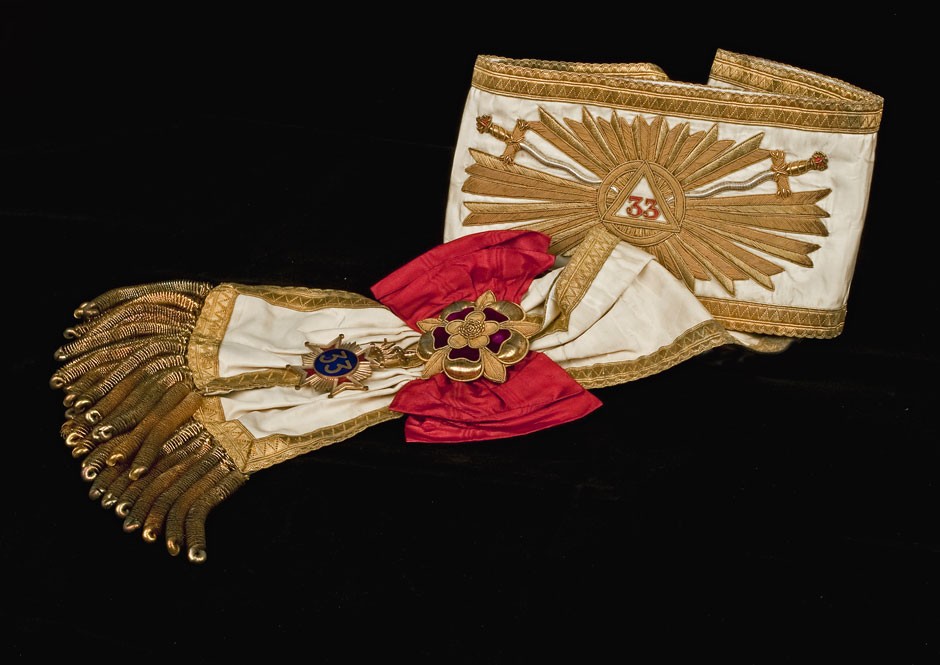
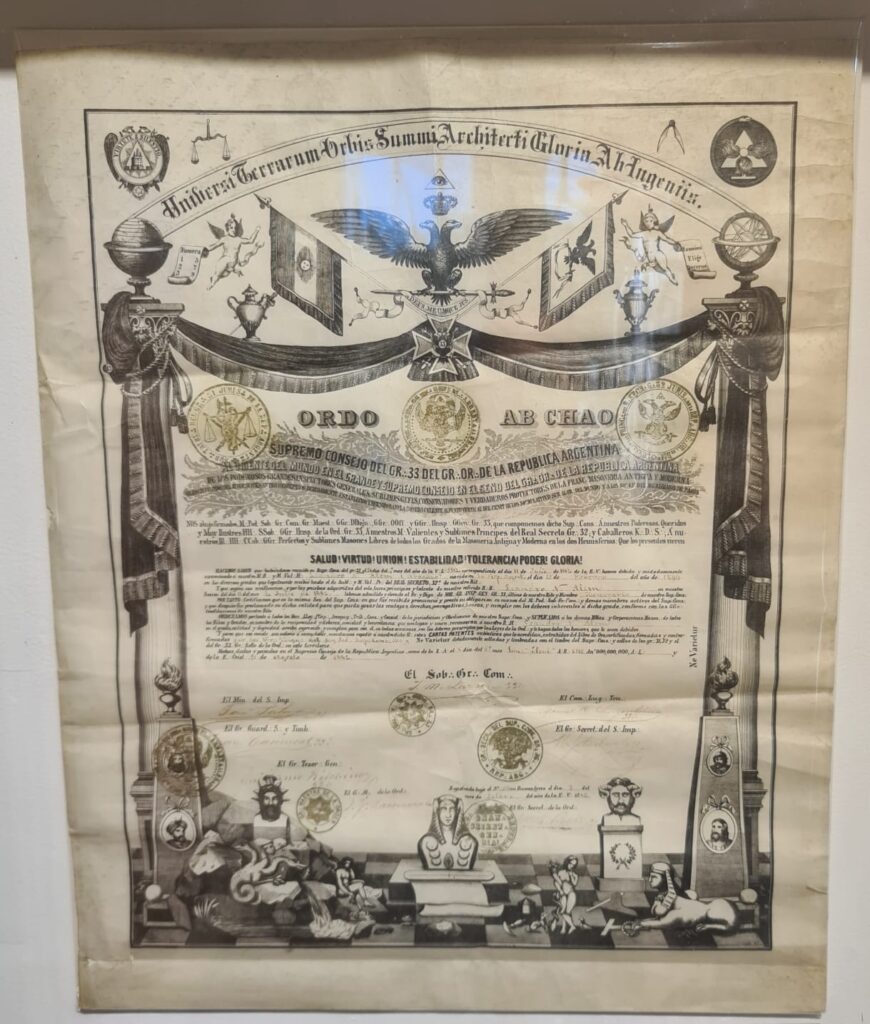
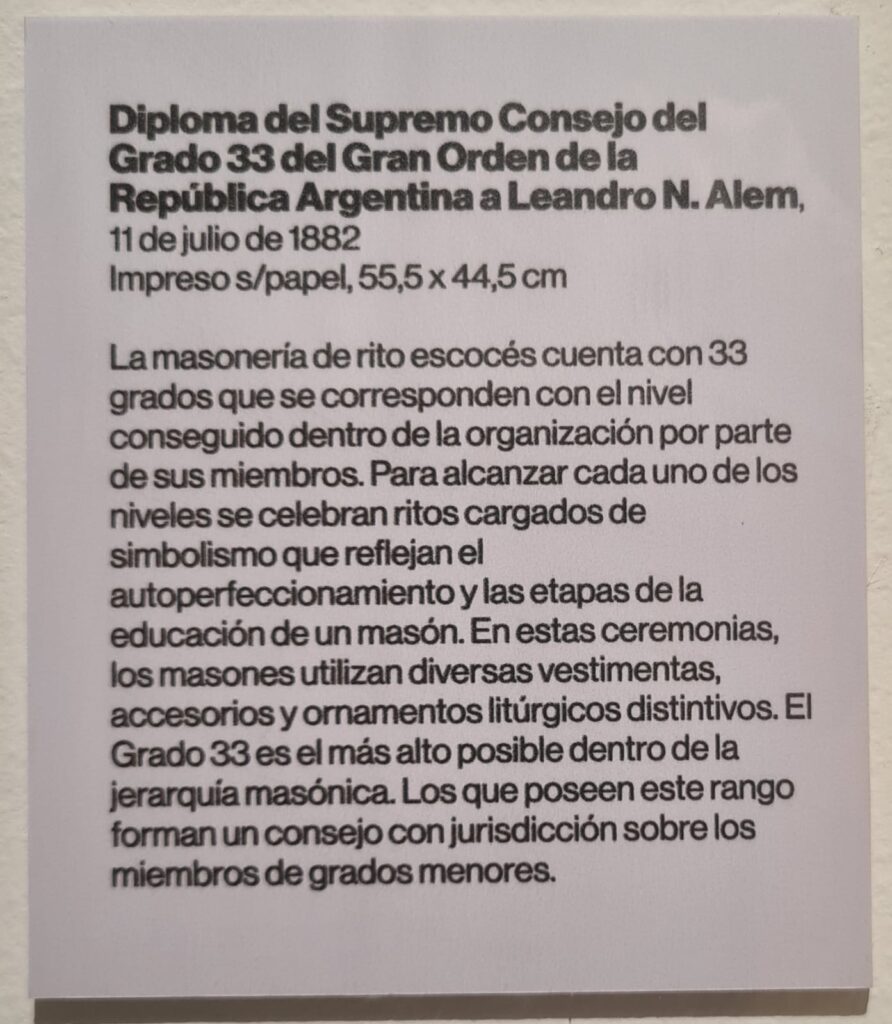
He was also a member of the 33rd Degree and his sash was proudly on display, along with the certificate issued to him by the Supreme Council on 11th July, 1882. A close look at the certificate reveals many similarities to the certificate of the present day.
This wonderful article was written by Ill. Bro Paul Groves 31° and kindly provided to us to publish on the Website. It is also available on the District of East Kent Rose Croix Group on Facebook.